
Cooking-Line Surfaces
Degreasing for accessible exteriors and surrounding surfaces at ranges, fryers, griddles, ovens, salamanders, and other line equipment. Cleaning follows the agreed scope and manufacturer-appropriate surface methods.
Serving Gilbert, Arizona & surrounding areas

Commercial kitchen cleaning · Gilbert, Arizona
Detailed cleaning for cooking lines, equipment, floors, walls, and hard-to-reach areas, scheduled around your operating hours.
Built around your operation
Commercial Kitchen Cleaning Services address the grease, carbon deposits, food residue, and soil that collect during daily restaurant operations. Gilbert Restaurant Cleaning provides detailed care for cooking lines, equipment exteriors, floors, walls, prep areas, and other agreed surfaces. The scope is matched to the kitchen rather than forced into a generic checklist.
As a professional restaurant company in Gilbert, we plan the work around equipment type, access, soil level, and operating schedule. A walkthrough identifies what can be cleaned in place, what needs to be moved by authorized staff, and which areas require extra dwell time for a degreaser. We then provide a written scope so managers know which surfaces are included before work begins.
Gilbert's hot climate can increase the strain on busy kitchens and waste-storage routines, particularly during long service days. Regular removal of grease and food soil helps kitchens maintain cleaner work areas between deeper visits. We serve restaurants and food-service operations near the Heritage District, where older commercial spaces can have tight back-of-house layouts, as well as newer restaurant corridors around SanTan Village where larger cook lines may require a different crew plan.
Detailed capabilities
Degreasing for accessible exteriors and surrounding surfaces at ranges, fryers, griddles, ovens, salamanders, and other line equipment. Cleaning follows the agreed scope and manufacturer-appropriate surface methods.
Detail work for stainless steel exteriors, equipment legs, casters, control-area surrounds, shelving, handles, and accessible spaces beneath or behind movable units. Electrical and gas components are not saturated.
Removal of grease film and food soil from washable walls, floor edges, base coving, grout lines, and accessible areas beneath equipment. Suitable chemicals and controlled rinsing help limit slippery residue.
Cleaning can include empty prep tables, shelving exteriors, sink surrounds, splash areas, and the washable surfaces around dish equipment. Food, utensils, and loose supplies must be secured first.
Empty shelving, accessible walls, doors, gaskets, and floors can be added to the scope. Product handling and temperature control remain the operator's responsibility during service.
One-time resets and recurring service are available based on operating volume, menu, equipment, and buildup. High-grease cooking usually needs a different schedule than a light-prep kitchen.
Beyond daily closing
Daily closing work handles immediate spills and routine sanitation. Commercial Kitchen Deep Cleaning addresses buildup in less accessible places: floor edges behind equipment, caster assemblies, equipment sides, wall junctions, shelving supports, and the gaps where grease and crumbs collect over time.
Professional Kitchen Cleaning starts with dry soil removal where appropriate. The crew then applies a surface-compatible detergent or degreaser, allows the required dwell time, agitates stubborn deposits, and removes the loosened soil. Final wiping or rinsing depends on the surface and chemical label. Food-contact surfaces included in the scope require the proper rinse and sanitizing steps before they return to use.
Grease removal should never mean spraying every component. Motors, pilot assemblies, control panels, electrical connections, and sensitive seals require controlled application. Hood and duct exhaust cleaning is also a distinct specialty with its own access and service requirements, so its inclusion should be confirmed separately rather than assumed.

A defined process
Step 1 of 5
We review the cook line, prep areas, floors, storage spaces, access constraints, and visible buildup. Managers can identify priority areas and any equipment that must remain available.
Step 2 of 5
The written plan lists included surfaces, exclusions, preparation duties, and timing. Work may be arranged after closing, before opening, or during another approved shutdown window.
Step 3 of 5
The operator removes or protects food, utensils, smallwares, and loose supplies. Equipment is cooled, shut down, or disconnected when required, and movement is handled only by authorized people.
Step 4 of 5
The crew works through the agreed zones using suitable chemicals, dwell times, agitation tools, and soil-removal methods. Care is taken around controls, electrical parts, and other sensitive components.
Step 5 of 5
A final walkthrough checks the listed areas and identifies any maintenance issue exposed during cleaning, such as damaged grout or a deteriorated gasket. The kitchen operator completes reopening checks before production resumes.
Clear expectations first
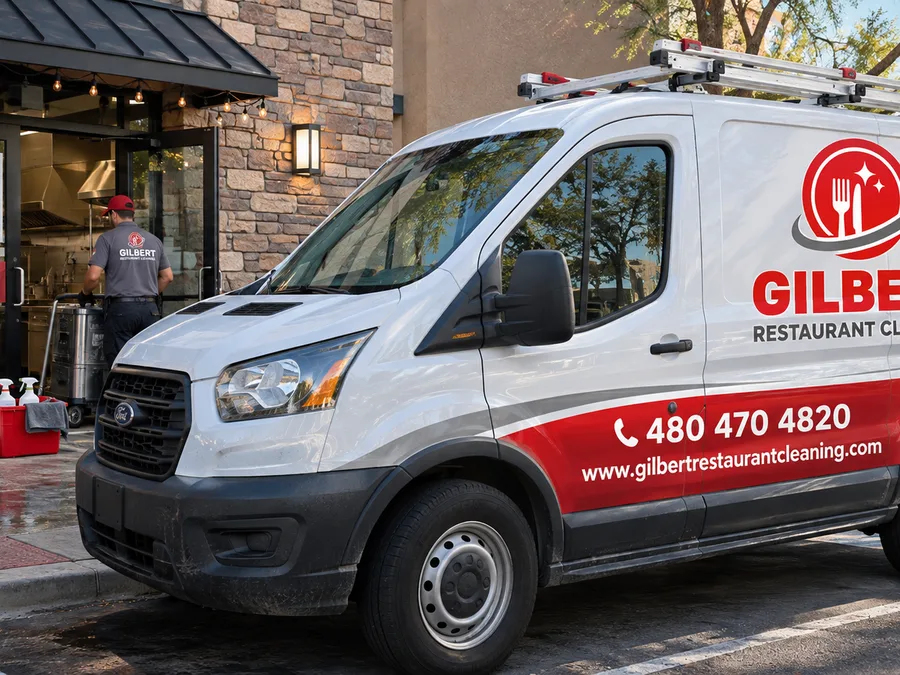
A useful proposal should define the work rather than promise a generally cleaner kitchen. Ask which equipment and surfaces are included, whether the crew cleans beneath movable units, who handles equipment movement, and how food-contact surfaces are treated. Confirm whether consumables, waste removal, walk-ins, and exterior loading areas are part of the scope.
Access matters in Gilbert restaurants with narrow back-of-house passages or shared commercial spaces. A responsible Kitchen Cleaning Company asks about loading access, floor drains, water availability, alarm procedures, key control, and the time when equipment will be cool enough to clean. If a restaurant must reopen early, the drying and reset window should be included in the schedule.
Insurance documentation, chemical labeling, Safety Data Sheets, and crew supervision are reasonable topics to discuss. Restaurant Kitchen Cleaners in Gilbert should also be clear about exclusions. Routine surface cleaning does not replace pest control, equipment repair, fire-suppression inspection, or specialized exhaust-system cleaning.
Planning your budget
Commercial kitchen cleaning in Gilbert typically ranges from $500 to $1,500 for a smaller kitchen deep clean, while large kitchens or heavy grease buildup may run from $1,500 to $4,000 or more. These are general planning ranges, not a fixed quote.
Final pricing depends on kitchen size, equipment count, soil level, access, floor and wall condition, service frequency, and whether equipment must be cleaned beneath or behind. Overnight scheduling and special handling can also affect labor. The exact cost is confirmed after a walkthrough and written scope.
Cleaning frequency
The right interval is based on actual use. Frying, charbroiling, high-volume production, and extended operating hours tend to create grease faster than light assembly or bakery work. Some kitchens benefit from targeted recurring work on the cooking line and floors, with broader wall, storage, and equipment detailing scheduled less often.
Seasonal business changes should be considered as well. A kitchen that adds service hours, changes its menu, or increases fryer use may need its cleaning interval adjusted. Monsoon-season dust can also enter receiving and back-of-house areas when exterior doors open frequently, so entry points and floor edges may need added attention during dusty periods.
Commercial Kitchen Cleaning in Gilbert works best when the plan identifies tasks by frequency. Managers can keep daily sanitation duties in place while assigning labor-intensive degreasing and hard-to-reach cleaning to a trained crew. Cleaning supports a well-managed operation, but the restaurant remains responsible for its food-safety procedures, equipment maintenance, and compliance obligations.
Arrange a walkthrough to document priority areas, access requirements, preparation duties, and a schedule that fits your operating hours.
Call for a Free QuoteCommon questions
A focused cleaning may take several hours, while a large kitchen with heavy buildup can require a full shutdown window or more than one visit. Equipment count, access, grease level, and the number of included areas determine the schedule. For Gilbert restaurants with early opening times, the plan should leave enough time for drying, resetting equipment, and operator reopening checks.
Yes, after-hours cleaning can be arranged when access, alarm procedures, equipment cooling, and reopening times are confirmed in advance. The manager should provide a secure entry plan and identify any equipment that cannot be shut down. Overnight work must also account for noise or access rules that apply to a shared Gilbert commercial property.
Equipment is moved only when the scope, connections, weight, and safe access allow it. Gas lines, electrical connections, water lines, anti-tip devices, and manufacturer requirements may mean that a qualified technician or restaurant staff member must disconnect or move a unit. The walkthrough establishes responsibility before cleaning begins.
Yes, exposed food, utensils, smallwares, and loose supplies should be removed or securely protected before cleaning starts. Walk-ins or storage areas must be emptied to the level required by the agreed scope, with the operator maintaining safe product temperatures. This preparation gives the crew access and reduces the chance of chemical contact.
Exhaust hood, fan, and duct cleaning should be confirmed as a separate specialty scope rather than assumed to be included. General cleaning may address accessible exterior surfaces around the hood, but grease-exhaust systems have distinct access, documentation, and service requirements. The written proposal should state exactly what is covered.
The interval should follow cooking volume, menu, operating hours, and the rate at which grease and food soil return. Fryers and charbroilers often create more frequent cleaning needs than light-prep equipment. A walkthrough can divide daily, periodic, and deep-cleaning tasks so the schedule matches the kitchen's real conditions.
Tell Gilbert Restaurant Cleaning about your equipment, operating schedule, and priority areas. We will help define a practical scope and provide clear expectations before work starts.